There was a beautiful sunset yesterday but unfortunately I was driving home from work along the motorway. I pulled over to see what I could do to catch the atmosphere of the moment. Everything around me was really ugly so I decided to concentrate on the colours and forget the rest.
Friday, February 13, 2009
Skywatch Friday post
There was a beautiful sunset yesterday but unfortunately I was driving home from work along the motorway. I pulled over to see what I could do to catch the atmosphere of the moment. Everything around me was really ugly so I decided to concentrate on the colours and forget the rest.
Thursday, February 12, 2009
Scala dei Giganti (2)
 Another section of the staircase leading up to the Colle di San Giusto. The first photo is here
Wednesday, February 11, 2009
A sunny day in Barcola
 Still too cold to sit down and enjoy the sun but spring is on its way, or at least I'd like to believe it is today.
Tuesday, February 10, 2009

Monday, February 9, 2009
San Giovanni di Duino
 San Giovanni di Duino is a small village near the Timavo source, situated on the crossroads of the national roads for Trieste-Monfalcone and Gorizia/Nova Gorica.
In Roman times, San Giovanni di Duino was famous (Station Fontis Timavi), as the Lacus Timavi port was nearby and from here roads ran towards Goriška, past the Karst towards Vipava, to Trieste, Istria and Dalmatia and to Aquileia, Friulia (Pianura del Friuli) and Venice. The Slavs settled here during the time of the Great Migrations. The Benedictines built a monastery here in the 6th century (which later became the centre of the Christianization of eastern countries). The Church of St John (San Giovanni in Tuba) was a popular centre for ancient pilgrimage. Being at the crossroads of several different routes, it was destroyed and rebuilt many times.
The port of San Giovanni di Duino was economically important until the emergence of the liberated port of Trieste at the beginning of the 18th century.
From then on, San Giovanni di Duino started to deteriorate. It was finally burnt to ashes during World War I.
After the war, new houses were built. In 1932, a new church of St. John the Baptist was built above the road.
Today, there is not a single trace that would testify to the importance of the village in the past.
The port of San Giovanni di Duino was economically important until the emergence of the liberated port of Trieste at the beginning of the 18th century.
From then on, San Giovanni di Duino started to deteriorate. It was finally burnt to ashes during World War I.
After the war, new houses were built. In 1932, a new church of St. John the Baptist was built above the road.
Today, there is not a single trace that would testify to the importance of the village in the past.
Sunday, February 8, 2009
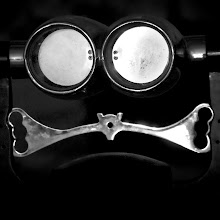
Robot hand
 The articulated arm of Mikeze, one of the robot statues which, together with Jakeze, chimes the hour every fifteen minutes. The arm, set in motion by the clockwork mechanism, lifts a hammer to strike the hours.
Both the robots came into service at 12 pm on 14th January 1876. In 1972, severely worn out by weather conditions and by mechanic stress, Mikeze and Jakeze were "duplicated". The two original robots were restored in 2005 and they are now on display at the entrance of the Castle of San Giusto.
Saturday, February 7, 2009
Winged woman, Mikeze and Jakeze
 On the left is the top part of the fountain seen on Monday, February 2: a winged female figure symbolizing Trieste’s prosperity. Standing on Karst rocks, the statue is surrounded by packages, bales of cotton and rope. It symbolizes a city welcoming traders from the world over.
 On the right is the tower of the town hall of Trieste. As a distinctive feature of the town hall facade designed in 1873, the architect included in the middle of the large horizontal development a tower which stands out with its truncated pyramid roof. The tower houses the town clock and two molten zinc statues resembling pages and locally known as Micheze and Jacheze, Michele and Giacomo in Italian (probably from the Slovene Mihec and Jakec).
Friday, February 6, 2009
Skywatch Friday post
 Clouds mimicking the struggle of the statues, a monument dedicated to the Triestine volunteer soldiers who died in the first World War.
Thursday, February 5, 2009
Lady swimmer
 The lady swimmer, a sculpture by Trieste-born Ugo Carà (1908-2004), is showing off her style in the pine grove at Barcola, the town's seafront promenade and beach.
Wednesday, February 4, 2009

Tuesday, February 3, 2009
Storm jib
 An important safety aspect of sailing is to adjust the amount of sail to suit the wind conditions. As the wind speed increases the crew should progressively reduce the amount of sail (wiki).
Here's a good example of reduced sail while sailing in the Gulf with a strong Bora wind (probably 20/25 knots). No mainsail up, just a storm jib, a small sail made out of heavy cloth for use in heavy weather.
Monday, February 2, 2009
Fountain of the four continents
 Piazza Unità d'Italia is Trieste's main square, which opens up onto the Gulf of Trieste and is surrounded by palazzi and public offices. This rectangular-shaped square is the largest waterfront square in Europe (there are few others directly overlooking the sea, another very famous one is Trade Square in Lisbon.) It hosts numerous events, performances and concerts, and is a favourite meetingplace for Triestines.
At the centre of the Piazza is the Fontana dei Quattro Continenti (1751). The fountain was built to represent Trieste as a city of prosperity, thanks to its establishment as a Free Port by Charles VI and Maria Theresa of Austria's policy for developing the city.
The world is represented by four allegorical statues which recall the features of the people populating the four continents known at that time (Europe, Asia, Africa and America). In recent years, the fountain has been a victim of acts of vandalism which have damaged three of its four statues. Only Europe has been spared. The latest episode dates back to May 2008, when the statue representing Africa was decapitated and its head left lying on its body.
Sunday, February 1, 2009
February Theme day: paths and passages

Today the series of photos about the Risiera di San Sabba has come to an end.
If you haven't paid a visit to this blog recently and want to see the rest you can walk through the 11-metre high concrete walls arranged to form a disquieting entrance and go back in time to 27th of January, Remembrance Day.
The passage was designed by Romano Boico, the architect who, in 1966, won the competition to convert the Risiera into a museum (opened in 1975).
The Risiera - explained Boico - half destroyed by the fleeing Nazis, was squalid, like its surroundings. So he thought that the total squalor could rise as a symbol and itself become a monument. He decided to remove and restore rather than add. After removing the ruined buildings, he demarcated the context with high concrete walls, like those in the photo. The walled courtyard is intended as an open-air non-denominational basilica. The building where prisoners were kept was completely emptied and the load-bearing wooden structures pared down as much as seemed necessary. The seventeen cells and the death cell are unchanged.
part 1 2 3 4 5
Click here to view thumbnails for all participants
If you haven't paid a visit to this blog recently and want to see the rest you can walk through the 11-metre high concrete walls arranged to form a disquieting entrance and go back in time to 27th of January, Remembrance Day.
The passage was designed by Romano Boico, the architect who, in 1966, won the competition to convert the Risiera into a museum (opened in 1975).
The Risiera - explained Boico - half destroyed by the fleeing Nazis, was squalid, like its surroundings. So he thought that the total squalor could rise as a symbol and itself become a monument. He decided to remove and restore rather than add. After removing the ruined buildings, he demarcated the context with high concrete walls, like those in the photo. The walled courtyard is intended as an open-air non-denominational basilica. The building where prisoners were kept was completely emptied and the load-bearing wooden structures pared down as much as seemed necessary. The seventeen cells and the death cell are unchanged.
part 1 2 3 4 5
Click here to view thumbnails for all participants
Saturday, January 31, 2009
The club
 Human bones and ashes were found among the rubble of the crematorium dynamited by the fleeing Germans, in three paper sacks of the sort used for cement. The club was also found amid the rubble.
It was used to torture and kill many prisoners and is made up of a wooden handle, woven metal cables and a metal prism.
What adds horror to horror is the little note informing visitors that the club was stolen in February 1981 by a group of people calling themselves "SAH - Squadre Adolf Hitler" (Adolf Hitler's squad). The club on display today is a replica of this object, made and donated in 2000.
part 1/2/3/4
Friday, January 30, 2009

Thursday, January 29, 2009
The furnace
 Though Remembrance Day is over, I still linger in this terrible place, trying to give my modest contribution to revealing the local scenes of this appalling tragedy.
So I'll keep on posting images of the Risiera di San Sabba until the first of February, our theme day. Forewarned is forearmed.
This is the inner courtyard, opposite the cells. On the site now marked on the ground by a metal plate, was the building housing the furnace in which bodies were cremated - its outline is still visible on the main building.
On the night of 29th April 1945 the building housing the crematorium and the chimney stack connected to it were dynamited by the fleeing Germans to remove the evidence of their crimes, as was their practice.
part (1) (2)
Wednesday, January 28, 2009
Confiscated
 One of the articles pillaged by the Nazis from Jewish houses in Trieste and on display in the museum of the Risiera di San Sabba.
(part1)
Tuesday, January 27, 2009
27011945-27012009
 On January 27th 1945, Soviet troups reached the Polish city of Oświęcim (better known by its German name Auschwitz), where they discovered its sadly famous concentration camp and freed the few remaining survivors. Since 2001 in Italy, Remembrance day is celebrated each year on January 27th to commemorate the victims of Nazism and Fascism, of the holocaust and in honour of those who risked their own lives to protect the persecuted.
This rose mounted on barbed wire stands outside one of the cells of the Risiera di San Sabba, a former rice-husking facility that was built in 1913.
After September 8, 1943, the Nazi occupation forces used the San Sabba premises as prison camp, headquarters where deported prisoners were sorted out to be sent to Germany and Poland, raided goods depot, prison and extermination camp for hostages, partisans, political and Jewish prisoners. On April 4, 1944 a crematory plant was installed and made operative.
Monday, January 26, 2009

Sunday, January 25, 2009
The Cathedral of San Giusto
 The Cathedral of San Giusto photographed from behind.
On the right you can see part of the flattened-pyramid-shaped tiled roof I talked about yesterday.
Saturday, January 24, 2009
Melon
 Together with the alabarda of San Sergio, the so-called "melon" is a traditional symbol of the city of Trieste and both were originally placed on the tower bell of the San Giusto Cathedral till 1421 when the tower was seriously damaged by lightening.
The Melon is an acroterion (a sculpted decorative feature mounted at the apex of the plinth of a building) in sandstone, modelled in twelve segments, hence its name, and it is surmounted by a copy of the alabarda of San Sergio.
In 1422 the melon was taken down and the bell tower was replaced with a flattened-pyramid-shaped tiled roof. From that day on, the Melon began its pilgrimage. It has been placed on a roadside, exhibited in a museum, showcased in a niche and also inside in building.
It has now been restored and can be admired at the entrance of the San Giusto castle.
Friday, January 23, 2009
Skywatch Friday post
 This photo, along with the ones I have posted over the last three days, was taken last Sunday, the last time the sun showed its face in Trieste. Here the clouds were moving in from the south and beginning to close in the whole sky over the gulf. Ten minutes after I shot the picture, just before the sun set, it disappeared behind a thick mantle of cloud and that was it, bye bye sun!
Thursday, January 22, 2009
Floating market
 While the rowers were rowing, these two fishermen, moored at a jetty in Barcola, were selling their fish, which they had just freed from the nets.
Few people were actually buying their wares, those crowded round the boat were mostly curious bypassers who appeared never to have seen a live fish.
Wednesday, January 21, 2009

Tuesday, January 20, 2009
Rowing (2)

Here are the rowers in action.
Two different types of boat are used and reflect the two forms of rowing: sweep rowing and sculling. In sweep rowing each rower handles a single oar in sculling a rower uses two oars, or sculls.
The sweep boats (each rower has one oar) can have a coxswain (a person who steers the shell using a rudder). So we can have a Coxed Pair (2+), a Coxless Pair (2-), a Coxed Four (4+), a Coxless Four (4-), a Eight (8+).
The Sculling Boats (each rower has two oars) only in rare cases have a coxswain. Steering is generally accomplished by applying more power or pressure to the oar(s) on one side of the shell. So we can have a Single (1X), a Double, a Double (2X), a Quadruple (4X), an Octuple (8X).
Monday, January 19, 2009
Rowing
 Trieste boasts fifteen or so rowing clubs, five of which are over a hundred years old. The oldest was founded in 1863. So, as you can imagine, rowing is an important sport in the city. Some clubs are based right on the city's seafront, and so, as you stroll along the promenade, you may come across a rower as they slide their boat into the water for a training session.
Today's photo is an archive photo shot at the beginning of the autumn when it was still warm enough to wear just a t-shirt, tomorrow I'll show you some rowers in action in the freezing winter gulf.
Sunday, January 18, 2009
Mount Nanos
 On my way back from a long lunch out in Slovenia, just 10km from Trieste, I was struck by the beauty of this view of the moon over Mount Nanos (which can be seen from Trieste too) and simply had to pull over to take this shot.
Nanos is a karstic plateau over 1.000 m. It stretches for 10km along the fertile Vipava valley and dominates and shelters the south western Slovenian landscape, interspersed with villages, green valleys, vineyards, and Karst limestone buildings and walls, which give it character.
The highest summit “Plesa”, which can be seen in the photo, is on the east edge of the plateau, with quite a steep slope down to the village Razdrto, which is where the most popular path to the summit starts.
Saturday, January 17, 2009
Oil tanker and mussel farm number 2
 ...but there's also a European shag spreading its wings on one of the mussel farm's floating barrels.
(number1)
Friday, January 16, 2009
Skywatch Friday post
 Sunset from the village of Caresana, a few kilometres away from the Gulf of Trieste which you can just make out in the distance.
Thursday, January 15, 2009
Waiting for the green light (1)
 As I was waiting for the traffic lights to turn green, I snapped this shot without looking through the viewfinder. Strangely enough, besides the palazzo, which I'll tell you about in a minute, there is also a streetlamp reflected in the wing mirror and the building on the other side of the road is reflected in the door handle. How lucky can you get!
So back to the palazzo: it dates back to the first half of the nineteenth century and right on this corner, hidden by my car, is the oldest business in Trieste - Farmacia Picciola, a chemist.
The upper floors of the palazzo have just been converted into a hotel called Hotel Victoria, which was inaugurated last month. It is described as a "literary hotel", as good old James Joyce, yup him again, was a tenant there. He was also one of the chemist's most famous customers.
Besides welcoming wealthy tourists to stay on its premises, the owners of this four star hotel are planning on hosting cultural events, exhibitions and concerts.
Wednesday, January 14, 2009
James Joyce
 The statue of James Joyce by the Canal Grande.
Joyce arrived in Trieste in 1904 to take up a post teaching English at the Berlitz School. A gifted linguist, he took to the local Triestine dialect with ease, and quickly felt at home.
Money was a constant problem for Joyce, despite being much in demand as an English tutor and writing articles for Il Piccolo newspaper. He managed to turn getting money from friends, relatives and students into an art form, but reckless spending and frequent drinking binges kept him in penury.
It was against this unpromising background that Joyce wrote Dubliners and A Portrait of the Artist As a Young Man, and began his research for Ulysses. According to the writer Anthony Burgess in an article in The New York Times in 1982: “ Ulysses may be about Ireland, but only turbulent and cosmopolitan Trieste could have given Joyce the impetus to start setting it down.”
Trieste was the primary port of the Austro-Hungarian Empire, full of hard-headed businessmen and risk-taking entrepeneurs. They have left their mark in the broad avenues and grand buildings of the city, many of them now home to hotels and banks. The arts were not a priority here – making money came first. Trieste was the Empire’s prosperous gateway to the trade of the east. Yet the cosmopolitan nature of the city, with its mix of Italian, Slav and German cultures and its undercurrent of revolution, attracted a number of foreign writers. Apart from Joyce, these included Sigmund Freud, Rainer Maria Rilke and Sir Richard Burton, who translated the Thousand and One Nights while British Consul at Trieste.
Tuesday, January 13, 2009

Monday, January 12, 2009
Lookout at San Lorenzo
 The "lookouts" in the Trieste Karst are small concrete constructions situated at various points on the Karst ridge, along the paths and in places where there is a particularly good view.
This one is near a village called San Lorenzo at 377m above sea level.
Sunday, January 11, 2009
El Pedocin - part 2
 Triestinian women would appear to like smoking under the shower!
Here I'd like to explain yesterday's enigmatic caption (which Vogon Poet and JM cleverly worked out).
El Pedocin (little louse), a public beach in the centre of town, dates back to the end of the nineteenth century; it is the only bathing establishment in Europe with a wall to divide the beach into two separate sections, one for men and the other for women: the only way they can meet is by swimming out to sea.
The separation of the sexes is very strict, and should a man (or woman) ever try to enter the other section, they would receive a volley of insults and be chased straight back out, unless, as in my case, the beach is completely deserted due to the icy cold weather.
The beach's nickname "pedocin" comes from a time when all the bathers used to have to leave the beach between two and four in the afternoon to allow soldiers to come in on their mules and horses to have a wash. The animals were tied up in what are now used as the changing rooms. Both the animals and the soldiers were often riddled with lice. Hence the name Pedocin.
Saturday, January 10, 2009
El pedocin
 It's very hard for a man to take a picture like this. The only time you can is when there are no women around ...
Friday, January 9, 2009


Thursday, January 8, 2009
Piazza Venezia
 Maximiliano I, Emperor of Mexico, has just been moved back to the newly done up Piazza Venezia, after standing in Miramare gardens for 90 years, and is having a chat to catch up with his old friends, statues on the nearby Museo Revoltella.
Wednesday, January 7, 2009
Yacht Club Adriaco
 The yacht club Adriaco is located on a pier in the middle of a small, extremely crowded harbour on the town's central seafront.
Founded in 1903, it's the oldest yacht club in the Adriatic.
Tuesday, January 6, 2009
Trieste by night
 On my way home yesterday, there was such a beautifully lit horizon that I couldn't resist stopping off at Conconello again to enjoy the view. I didn't have my tripod with me, but thought I'd have a go and see what came out. And here it is.
Monday, January 5, 2009
The Cathedral of San Giusto
 San Giusto Cathedral, where yesterday's painting is displayed, is the main hall of worship dedicated to Catholicism in the city.
The present-day church was constructed by joining two pre-existing basilicas under one roof, to provide the city with an impressive cathedral.
The church's austere facade is enriched by a delicately-worked ornate Gothic rosette in Karst stone, and is covered with Romanesque stones found on the site.
Sunday, January 4, 2009
San Giusto

As a christian under the rule of emperors Diocleziano and Massimiliano, he was imprisoned and brutally tortured in an attempt to break his will and force him to renounce his faith. In the end (303AD) he was condemned to death and thrown into the sea in front of Trieste, tied to heavy weights. The ropes he was tied with came undone and the martyr's body was found on the beach and subsequently buried.
Carlo Wostry portrayed the martyr on an enormous canvas in 1900. The painting is now kept in the Cathedral of San Giusto.
Saturday, January 3, 2009
Fontana di Montuzza
 The Montuzza fountain was built in 1938 to celebrate the dictator Benito Mussolini's visit to Trieste. It was originally intended as a temporary installation and was supposed to be taken down at the end of the celebrations. However, despite not being in working order, it survived both the second World War and its aftermath. And aren't we the lucky ones!!!
Friday, January 2, 2009
Skywatch Friday post
 I took this picture the same day and from the same viewpoint as the one I posted last friday but an hour later when the sun had just set. As you can see, the atmosphere and colours are completely different and that's the magic of sunsets. Always in constant and rapid change.
Once more: felice 2009 a tutti!
 See more Skywatch here.
Thursday, January 1, 2009
January Theme Day: best photo of the year 2008
 I have chosen the most commented photo as the best one. The Skywatch Friday Post of October 17. Happy 2009 to all the CDP bloggers and to all those who have visited this little blog and dropped me a few lines. I wish you all a serene 2009, a year without such menacing clouds looming overhead!
Don't forget to check out other cities participating in January Theme Day!
Subscribe to:
Posts (Atom)