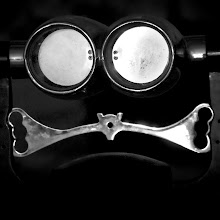
Vittorino Meneghello PRECE UMILE (marble) Museo Revoltella
Showing posts with label museums. Show all posts
Showing posts with label museums. Show all posts
Saturday, November 7, 2009
Thursday, October 22, 2009

Monday, June 22, 2009
Beethoven (Museo Revoltella)

As I was strolling through the lanes in Città Vecchia, the old part of town, I came across a small reproduction of one of the paintings I prefer out of those displayed in Museo Revoltella.
The original is by Lionello Balestrieri, who leapt to fame thanks to this large painting (420x202cm) when it won the gold medal at the Universal Expo in Paris. The following year, it was displayed at the 4th Biennale in Venice, where it was widely acclaimed. This is when it was purchased by Museo Revoltella.
The painting is based on the memory of an evening spent in the company of some bohemian friends in a Parisian attic flat, when the artist's friend Giuseppe Vannicola, a poet and musician, played the Kreutzer Sonata by Beethoven on the violin. In the picture, the painter is portrayed in profile sitting next to a young lady who gazes out at the viewer to get him involved in the pictorial scene.
Next time I visit the museum Revoltella, I'll post a photo of the original painting.
Video: Nathan Milstein plays Beethoven Kreutzer Sonata (1st Mov.)
Saturday, May 9, 2009
The importance of symbols

Piazza Oberdan, the square in which the museum of the Risorgimento is situated, underwent a vast architectural transformation in the early twentieth century. Until 1927 there was a huge Austrian military barracks in the area. The building was a symbol of the Austrian presence in the city, which came to an end in 1918 with the end of the First World War.
In December 1882, Guglielmo Oberdan was imprisoned and hanged in these barracks; the young Triestine had taken part in a failed attempt on Emperor Franz Joseph's life.
Between 1931 and 1935, the whole area of the square was renovated and symbols were turned completely upside down: where the Austrian military barracks had once been, a sacrarium dedicated to G.Oberdan was built, together with a museum designed by Umberto Nordio to display the evidence of the city's participation in the battle to unify Italy.
The building has a square tower soaring up higher than the other buildings around it where the Italian flag is always flying at full mast.
Today it is impossible to photograph the building face on, as a newer building blocks its view almost completely. And so here you have a slice of the museum as it is today and a photo taken in April 29 1934, during the opening ceremony.

Saturday, November 1, 2008
Theme day: Books
 Umberto Saba's antique books shop, now run by his associate's grandson.
Umberto Saba was born in Trieste on March 9, 1883 from a Jewish mother and a Christian father.During the writing years of Saba, Trieste is part of the Austro-Hungarian Empire. Three languages are spoken in town: German, the chiefly spoken local dialect, and Italian which is part of a high literary tradition. Saba uses the latter in his simple and original poetry which does not follow contemporary preferences.In 1919 Saba buys and keeps the antique bookstore in Via San Nicolò. He dedicates his life to poetry and his bookshop.
Saba writes simple and clear poetry, uses everyday words and describes aspects of everyday life. Trieste, his birthplace, is the main protagonist of his poetry: the sea which stands for flight and spiritual adventures; love and sentiment for persons and family and the relationship with nature. Saba deeply loves what he is writing about. For Saba fame and praise arrive after the World War; today he is considered one of the most important Italian poets of the 19th century. The poet dies in 1957 in San Giusto Hospital in Gorizia.
This is the most famous verse, which all Triestinians know (or should know) by heart:
Trieste has a rude
grace. If you like it
it's like a bigboned youth, uncouth and voracious
with blue eyes and hands too large
for giving flowers
like a jealous love
Click here to view thumbnails for all participants
American Fork (UT), USA by Annie, Arradon, France by Alice, Auckland, New Zealand by Lachezar, Austin (TX), USA by LB, Avignon, France by Nathalie, Bali, Indonesia by Anak Dokan, Bandung, Indonesia by Harry Makertia, Bandung, Indonesia by Bunyamin, Belgrade, Serbia by Bibi, Bellefonte (PA), USA by Barb-n-PA, Birmingham (AL), USA by VJ, Boston (MA), USA by Cluelessinboston, Budapest, Hungary by Zannnie and Zsolt, Buenos Aires, Argentina by Karine, Canterbury, UK by Rose, Cavite, Philippines by Steven Que, Chandler (AZ), USA by PattheAZRealtor, Chapel Hill (NC), USA by missleah, Cheltenham, UK by Marley, Coral Gables (FL), USA by Jnstropic, Evry, France by Olivier, Fort Lauderdale (FL), USA by Gigi, Geneva (IL), USA by Kelly, Grenoble, France by Bleeding Orange, Helsinki, Finland by PPusa, Herne Bay, Great Britain by Han, Lil n Caz, Hobart, Australia by Greg, Islip (NY), USA by Bettye, Jackson (MS), USA by Halcyon, Jakarta, Indonesia by Santy, Jefferson City (MO), USA by Chinamom2005, Karwar, India by Yogesh, Knoxville (TN), USA by hope, Lisbon, Portugal by Sailor Girl, Lisbon, Portugal by Maria João, Madrid, Spain by Tr3nta, Manila, Philippines by Hilda, Manila, Philippines by Heyokity, Melbourne, Australia by Mblamo, Melbourne, Australia by John, Menton, France by Jilly, Milwaukee (WI), USA by karl, Minneapolis (MN), USA by Mitch, Minneapolis (MN), USA by snapshutter, Molfetta, Italy by saretta, Monte Carlo, Monaco by Jilly, Monterrey, Mexico by rafa, Moscow, Russia by Irina, Moscow (ID), USA by Sherry, Mumbai, India by MumbaiiteAnu, Murcia, Spain by usuahia, Napa (CA), USA by katester, Nelson, New Zealand by Meg and Ben, Paderborn, Germany by Soemchen, Palos Verdes (CA), USA by tash, Paris, France by Elsa, Pasadena (CA), USA by Petrea, Pensacola (FL), USA by P J, Philadelphia (PA), USA by Stephanie Craig, Phoenix (AZ), USA by Sharon, Port Angeles (WA), USA by Jelvistar, Prague, Czech Republic by Honza03, Ramsey, Isle of Man by babooshka, Reykjavik, Iceland by Vírgíll, Roanoke (VA), USA by Tanya, Rotterdam, Netherlands by Ineke, Rouen, France by Bbsato, Saarbrücken, Germany by LadyDemeter, Saigon, Vietnam by Simon, Saint Louis (MO), USA by Strangetastes, Saint Paul (MN), USA by Kate, Salem (OR), USA by jill, Salem (OR), USA by pearls, San Antonio (TX), USA by Kramer, Seattle (WA), USA by Chuck, Seattle (WA), USA by Kim, Selma (AL), USA by RamblingRound, Seoul, South Korea by Phil, Sesimbra, Portugal by Aldeia, Silver Spring (MD), USA by John, Singapore, Singapore by Zannnie, Singapore, Singapore by Keropok, Sofia, Bulgaria by Antonia, Stanwood (WA), USA by MaryBeth, Stavanger, Norway by Tanty, Stayton (OR), USA by Celine, Stockholm, Sweden by Stromsjo, Sunshine Coast, Australia by bitingmidge, Sydney, Australia by Sally, Székesfehérvár, Hungary by Teomo, Tacloban City, Philippines by agnesdv, Tauranga, New Zealand by Lisa Sarsfield, Telluride (CO), USA by mtsrool, Tempe (AZ), USA by angie, Terrell (TX), USA by Jim K, Torun, Poland by Glenn, Toulouse, France by Julia, Trieste, Italy by Rob&Piero, Turin, Italy by Livio, Verona, Italy by Valeria in Verona, Vienna, Austria by G_mirage2, West Paris (ME), USA by crittoria, West Sacramento (CA), USA by Barbara, Willits (CA), USA by Elaine, Woerden, Netherlands by Marcel, Yakima (WA), USA by katney, Yellowknife, Canada by Arctic Dreamer,
Wednesday, October 22, 2008
Museo Revoltella - part3
 An installation in the museum entrance hall. A rectangular fountain, and a small spiral staircase that recalls the helical flight of stairs in the adjoining eighteenth century palazzo. On the wall you can read a gigantic quotation from Plato's Phaedo. The installation was designed by Gerhard Merz in 1990.
(part1)(part2)
Tuesday, October 21, 2008

Monday, October 20, 2008
Museo Revoltella
 Via Diaz, The Revoltella Museum.
Yesterday I visited two temporary exibitions hosted in the Museum and took some pictures, of course. So tomorrow I'll show you the inside of the building.
As there were some road works going on outside the building I couldn't take the picture I wanted to, so here is a ... painting from wikipedia.
The Revoltella Museum was opened in 1872 in the palazzo belonging to Baron Revoltella (1795 - 1869).
Thanks to the frequent purchases and substantial donations made to the museum from the early years, the collection soon outgrew the exhibition space available, and the Municipality of Trieste decided to purchase the two buildings contiguous to the Baron’s 18th century residence, Palazzo Brunner and Palazzo Basevi.In 1963 Carlo Scarpa was commissioned a project to extend and refurbish the three buildings. The works took a long time and only after several years and a few partial openings, was the museum completed and inaugurated in 1993.
Subscribe to:
Posts (Atom)